Sermons by Bernard Bell (Page 9)
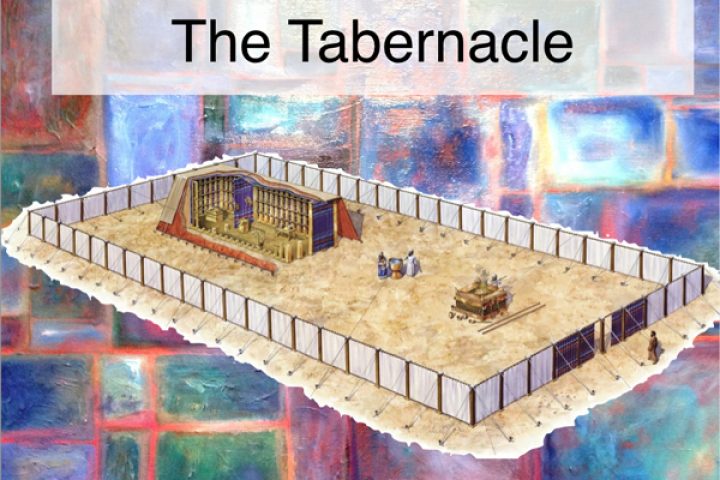
Jesus our Great High Priest
Exod 28:1-39 Continuing our series on the Tabernacle, we consider the high priest. He was the only one able to pass through both screens and the veil to enter into the Holy of Holies. He entered only once each year, on the Day of Atonement. Dressed in an elaborate set of holy garments, he carried on his heart and on his shoulders the names of the twelve tribes of Israel, so that, represented by him, they too were remembered before the Lord. But each year he had to come back out of Holy of Holies. Jesus, though, as our great high priest, has entered permanently into God’s presence, a minister in the holy places. In him, we are remembered permanently before the Lord. Our names are written on his hands.
Exclusion and Embrace
Exod 26:1-37 & 27:9-19 We return to the tabernacle for the month of February. This Sunday we will consider the tent and the courtyard which housed the seven items of furniture. God instructed Israel to make the tabernacle as a sanctuary so he could dwell in their midst (Exodus 25:8-9). But it was a dangerous thing for a holy God to dwell in the midst of a sinful people. They needed protecting from each other. Two screens and a veil progressively excluded people from approaching closer to God. They were excluded on the basis of ethnicity, of gender, of family background, and of physical perfection, until only one person was left who could enter the Most Holy Place, and he only on one day of the year. But now “we have confidence to enter the holy places by the blood of Jesus, by the new and living way that he opened for us through the curtain” (Hebrews 9:19-20). All the barriers are gone: “There is neither Jew nor Greek, there is neither slave nor free, there is neither male nor female, for you are all one in Christ Jesus” (Galatians 3:28). Exclusion has changed to embrace. God invites all to enter into his hospitality in Christ.
Stories and The Story
Stories and The Story
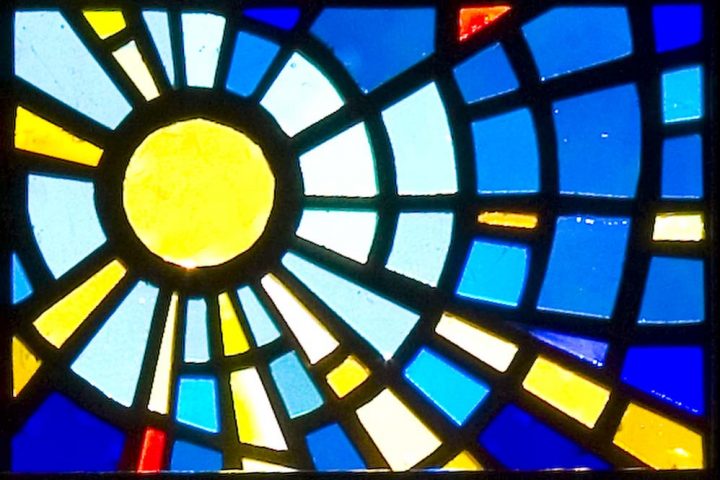
The Bible contains many stories, some familiar, others unfamiliar. Our new art exhibit depicts many of these stories. The Bible as a whole tells a single story, into which these individual stories fit. Much of this overarching story is depicted in the window which was installed ten years ago. To start the new year we will consider God’s story and how it intersects our story.
The Magnificat: He has remembered his love!
Luke 1:48-55 While the world rushes from Black Friday and Cyber Monday into the hectic frenzy of Christmas, with its seasonal liturgy of music and art, much of the church observes Advent, when we remember God’s promises to come to his people, and anticipate the second advent of our Lord Jesus Christ. How would you have responded had you been there when God fulfilled those promises through the birth of Jesus? According to Luke’s account, those who were there responded in song. Rather, they responded in psalm-like poetry, which the church quickly set to music and has sung ever since, often every day. We know these Lukan canticles (songs) by their opening words in Latin: the Magnificat of Mary, the Benedictus of Zechariah, and the Nunc Dimittis of Simeon. In the three remaining Sundays of Advent we will look at these three songs in turn. On Christmas Day itself we’ll consider the Gloria, sung by the angels announcing to the shepherds the birth of Jesus.
Bread and Light: Symbols of Presence
Exod 25:23-40
Mercy and Truth Are Met Together
Exod 25:10-22
Does God Dwell in Houses Made by Hands?
Exod 25:8-9
God’s Building Materials
Exod 25:1-9
A Window on Advent
PRELUDE: GOD
Before God can come to his world and his people, there must be a world and a people. But before that there must be God; and so we begin at the very top of the window with God, represented by two symbols. On the left is the Alpha and Omega, the first and last letters of the Greek alphabet. In the Old Testament God declared, “I am the first and I am the last; besides me there is no god” (Isa 44:6 esv; cf. 48:12). In the New Testament Jesus applies the same language to himself: “I am the Alpha and the Omega, the first and the last, the beginning and the end” (Rev 22:13; cf. 1:8, 17; 21:6). Everything begins and ends with God, and so our thinking must begin and end with God, otherwise we’ll get everything wrong.
The Day In Between
Luke 23:56
Who Has the Sword?
Luke 22:31-38
When Self Intrudes
Luke 22:21-30